.svg)
Schedule Form
Book your visit quickly—choose a time that works best for you.

Book your visit quickly—choose a time that works best for you.
May 12, 2026
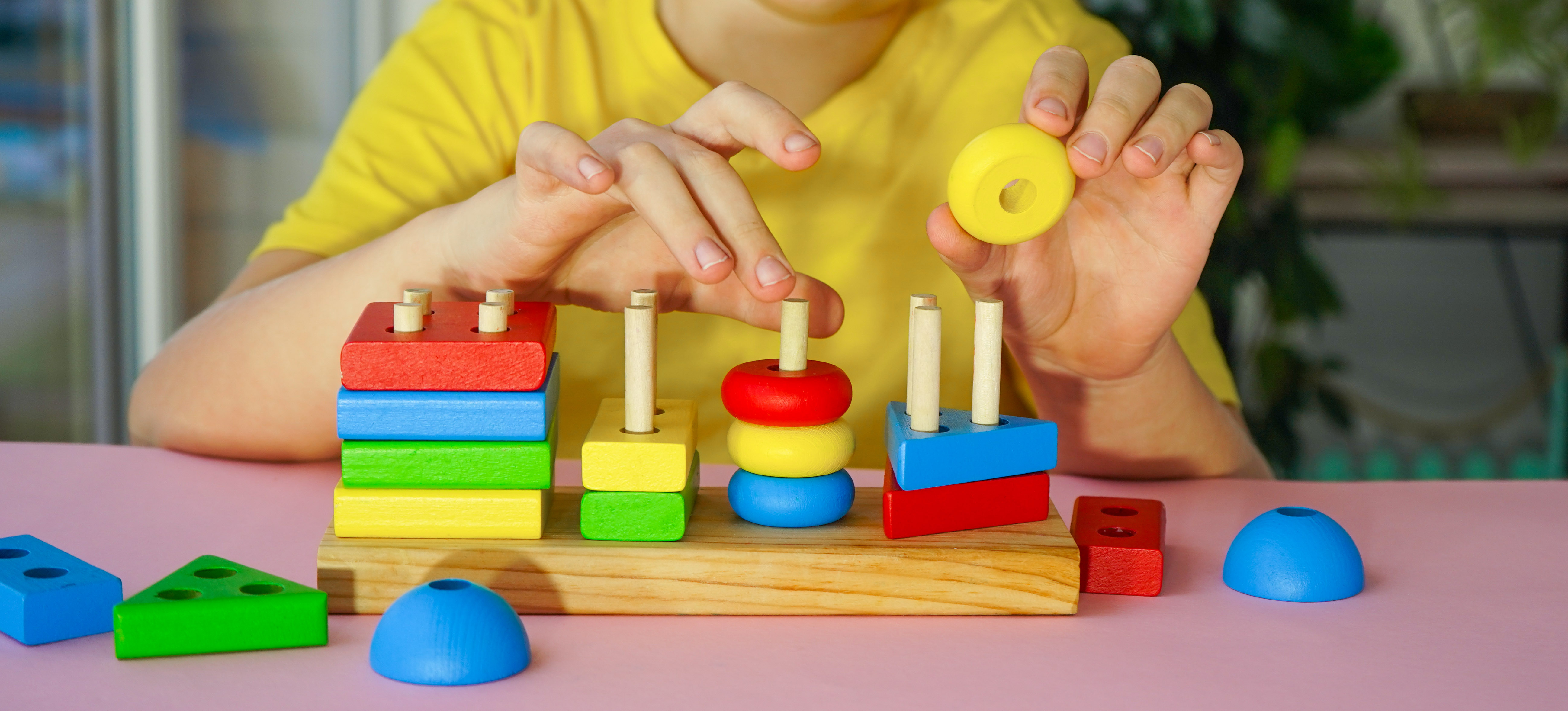
If you’re searching for a preschool in Norwood or the surrounding Delaware County area, you’ve probably come across the term “Montessori” more than once. But what does it actually mean — and how is it different from a traditional preschool program?
As a Montessori-inspired learning center, we get this question from parents all the time. Here’s an honest, straightforward breakdown of both approaches so you can make the best choice for your child.
Traditional preschool follows a teacher-directed model. The educator leads the class through structured lessons, all children work on the same activity at the same time, and the curriculum is organized around a set schedule. Learning tends to be more direct, with teachers explicitly instructing children on concepts like letters, numbers, colors, and shapes.
Traditional preschools often follow a play-based model as well, but the key distinction is that the teacher decides what children do and when they do it.
The Montessori method, developed by Dr. Maria Montessori in the early 1900s, takes a fundamentally different approach: it puts the child in the driver’s seat. Rather than following a teacher-dictated curriculum, children choose their own activities from a carefully prepared set of materials and work at their own pace.
The teacher’s role shifts from instructor to guide — observing each child, introducing new materials when a child is ready, and gently directing learning without taking over. The classroom environment itself is the teacher.
Research on the Montessori method has shown a range of positive outcomes for children, including:
Absolutely. Traditional preschool works very well for many children, particularly those who thrive with clear structure, direct instruction, and group activities. Some children find the open-ended nature of Montessori environments less comfortable, and that’s completely valid.
The best preschool for your child is the one that fits their personality, learning style, and your family’s values. There is no one-size-fits-all answer.
You may notice that some centers, including Norwood Academy, describe themselves as “Montessori-inspired” rather than fully certified Montessori schools. This means we apply the core principles and philosophy of the Montessori method — child-led learning, hands-on materials, individualized pacing, and a prepared environment — without holding official AMI or AMS Montessori certification.
A Montessori-inspired approach can offer many of the same benefits as a fully certified program, often at a more accessible price point and within a broader early childhood education framework that incorporates Pennsylvania learning standards.
Our preschool program for children ages 3–5 is rooted in Montessori principles and designed to prepare your child for kindergarten and beyond in any school environment — public, private, charter, or Catholic. Our educators are trained in the Montessori method and deeply committed to nurturing the whole child: their curiosity, independence, confidence, and joy of learning.
We document each child’s individual progress and share it with families through detailed progress reports and Brightwheel updates, so you always have a clear picture of how your child is growing.
We’re proud to serve preschool families in Norwood, Prospect Park, Ridley Park, Sharon Hill, Folsom, Glenolden, Darby, and across Delaware County, PA.